 Written by: Becky Mehr, MS, RDN, LDN, CEDS-C
Director of Outpatient Nutrition
National Nutrition Month is a time to explore the critical role nutrition plays in our lives and how those who participate help support the health of the community—including you.
“Let thy food be thy medicine and medicine thy food.” – Hippocrates (400 BC)
National Nutrition Month is a month-long campaign that spotlights nutrition and the role of the Registered Dietitian in supporting health in the community. At Renfrew, Registered Dietitians are a valuable part of the treatment team and can be essential for a successful recovery. Registered Dietitians help ensure nutritional needs are being met while providing the tools to challenge misinformation.
The History
National Nutrition Month began as a week-long campaign titled “National Nutrition Week,” launched in 1973 with a presidential proclamation. The American Dietetic Association (ADA) embraced this opportunity as a vehicle to deliver nutrition education messages to the public and promote its members as experts.
Seven years later, in 1980, the American Dietetic Association expanded “National Nutrition Week” into a full month—what we now know as National Nutrition Month®. The Academy of Nutrition and Dietetics (renamed from the ADA in 2012) shifted to a month-long campaign in response to growing public interest. Celebrated each year in March, the campaign promotes the importance of making informed food choices and developing sound eating and physical activity habits.
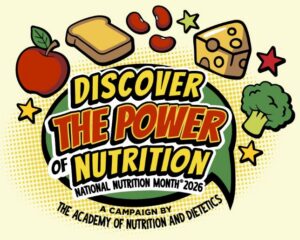
The theme for National Nutrition Month 2026 is “Discover the Power of Nutrition.” This year’s theme provides an opportunity to highlight how nutrition is key to thriving, sustaining energy, and supporting overall well-being. Because food is an essential part of daily life, it is important to explore our relationship with it.
Ways to “Discover the Power of Nutrition”
1. Enhances Health & Powers Your Day
Nutrition promotes both physical and mental well-being. When the body is properly fueled, it functions as designed—sending cues for hunger, fullness, rest, and even illness. These signals help us stay connected to our bodies so we can respond with care and intention.
When the body is under-fueled, it becomes more vulnerable to fatigue, mood shifts, illness, and decreased concentration. Adequate, consistent nourishment supports energy, focus, emotional regulation, and overall daily functioning.
Through gentle nutrition, we can expand rather than restrict our food choices (unless medically necessary due to allergies or other conditions), allowing greater freedom and flexibility with food.
2. Supports Immune Health
Nutrition is the foundation of a strong immune system. Providing the body with essential fuel, vitamins, and minerals required for healthy cells increases the body’s ability to fight illness. Routine consumption of a balanced diet reduces inflammation, supports gut health, and prevents nutrient deficiencies that can lead to increased susceptibility to infection or illness.
3. Enhances Endurance & Movement
Adequate nutrition also supports endurance. Fueling for movement helps repair muscle and boost strength during exercise. Exercise breaks down muscle tissue, and to rebuild it, the body must have enough fuel to replenish glycogen stores and repair muscle, reducing the risk of injury. Without sufficient nourishment, the body cannot effectively rebuild muscle, which increases the risk of injury.
4. Strengthens Connection
Nutrition can connect you to others. Through shared meals, exchanging cultural traditions, and cooking together, social bonds are formed. Engaging socially with food can reduce stress and loneliness while building community.
5. Builds Nutrition Literacy
People encounter a great deal of nutrition information daily, and some of it does not come from credible sources. Limited knowledge based on reputable, evidence-based information can have serious consequences, often leading to the omission of foods that would support health. This sometimes results in increased restriction based on false health information, which reduces dietary adequacy and variety and may contribute to the development of eating disorder behaviors.
When disordered eating or an eating disorder is present, a disconnection can occur within one’s culture, family, and body, leading to isolation, fear, or avoidance. Food is an integral part of daily living, which can make it especially challenging to navigate during the recovery process. Exploring the ways food connects us can help strengthen the relationship between you and your needs, values, and goals.
If, by reading this, you recognize that you are struggling with adequately and consistently nourishing your body in a way that aligns with your overall health goals, values, and needs, consider seeking support from a Registered Dietitian. A Registered Dietitian can assist you in reconnecting with your values and help move you toward improved and sustained health and well-being. They can customize a plan for you and provide education to support a nutritionally sound future in your recovery process.
Many people use this month as an opportunity to refocus on their health and look for resources aligned with the theme “Discover the Power of Nutrition.” Below are a few resources to help you get started or enhance your recovery journey.
Books To Read
- Salt, Fat, Acid, Heat: Mastering the Elements of Good Cooking by Samin Nosrat and Wendy MacNaughton
- The Princess and the Pea by Hans Christian Anderson
- Intuitive Eating by Evelyn Tribole, MS, RDN, CEDRD-S and Elysa Resch, MS, RDN, CEDRD-S, FAND
- Anti-Diet: Reclaim Your Time, Money, Well-Being, and Happiness Through Intuitive Eating by Christy Harrison, MPH, RD
- Gentle Nutrition by Rachel Hartley
- How to Nourish Your Child Through an Eating Disorder: A Simple, Plate-By-Plate Approach to Rebuilding a Healthy Relationship with Food by Wendy Sterling and Casey Crosbie
- Sick Enough by Jennifer Gaudiani, MD, CEDS, FAED
Renfrew-Specific Podcasts
- Episode 35: How Much is Too Much? Understanding and Treating Over-Exercise in Eating Disorder Recovery
- Episode 38: “Can I eat that?”: Busting Myths with PCOS Expert and Registered Dietitian Nutritionist, Angela Grassi
- Episode 39: “What’s Happening in Health Class?”: Preventing Eating Disorders in the School Setting with Lauren Dorman, RD
- Episode 52: Where’s My Roadmap? Parenting a Child with an Eating Disorder with Jane Reagan, RDN, CEDS-C, MEd
- Episode 59: A Balancing Act: Navigating Eating Disorders and Co-occurring Autoimmune Issues, Celiac Disease, and Food Allergies
- Episode 70: Blood Sugar and Diabetes Care Without Blame, Shame or Stigma with Janice Dada, CEDRD, CDCES, & Certified Intuitive Eating Counselor
Videos
Conclusion
National Nutrition Month is an opportunity to pause, reflect, and reconnect with the role of food in your life. Nutrition is not about perfection—it’s about learning to honor your body’s needs, celebrate the joy of eating, and build connections with yourself and others. Whether you are continuing your recovery journey or simply looking to strengthen your relationship with food, small, consistent steps toward understanding and nourishing your body can have a lasting impact on your health and well-being.
References:
- S Denny. (2006). National Nutrition Month: A Brief History. JADA. 106(3): 365-366.
- National Nutrition Month (eatright.org)